American Standard installation service
<!DOCTYPE html>
Durham Heating Secrets For Lower Winter Utility Bills
Durham Heating Secrets For Lower Winter Utility Bills
Practical strategies for homes in Durham, Middlefield, and Rockfall. Grounded in local weather, local housing, and the way American Standard systems work in Middlesex County.
Written for homeowners near the Durham Fairgrounds, Lake Beseck, Lyman Orchards, Powder Ridge Mountain Park & Resort, and the historic streets of Durham Center. Service radius covers 06422, 06455, and 06481 with rapid response from 57 Ozick Dr Suite i, Durham, CT 06422.
What drives winter bills in Durham and Middlefield
Winter costs in Middlesex County rise from a short list of technical causes. Outdoor design temperatures dip near single digits on cold snaps. Older capes and colonials leak air at chimneys, rim joists, and knee walls. Attic insulation levels vary house to house. Many furnaces and heat pumps run below design efficiency because of duct losses and control settings.
In practice, three forces dominate the bill. First, heat loss through the envelope. Second, infiltration from wind across historic wood framing. Third, equipment efficiency under load. Lowering utility costs means lowering those three forces. The steps below are practical, affordable, and proven in Durham Center, Coginchaug, Baileyville, and the Pistapaug Pond area.
Right-sizing heat for New England nights
A furnace that is too large cycles on and off. A heat pump that is undersized runs long and cold. Both waste money. The correct size depends on real design loads, not rules of thumb. The team at Direct Home Services uses Manual J load calculations for Durham and Middlefield homes. They account for insulation depth, window size, orientation, and wind exposure near places like Peckham Park or the open fields by the Durham Fairgrounds.
Right-sizing cuts short cycling. Short cycling raises fuel use and causes wear on igniters, blower wheels, and control boards. It also drives noisy ducts and uneven temperatures at the back bedrooms. Correct sizing helps any system. It is essential for variable speed equipment such as the American Standard Platinum 95 Gas Furnace and AccuComfort heat pumps. These units modulate fire rate or compressor speed to match the load. They save energy when the math is right.
Thermostat strategy that fits American Standard controls
Thermostat logic matters in 06422 and 06455. A two-degree swing can add hours of runtime during a cold day off Lake Beseck. For American Standard systems with AccuLink communicating control, set temperature schedules with gentle ramps. Allow the system to preheat the home before peak demand. Use the adaptive recovery features in the AccuLink control when paired with a Platinum 95 or a Platinum 20 outdoor unit. This smooths load and reduces auxiliary heat calls in dual-fuel setups.
For single-stage Gold 80 Furnaces, keep setbacks small. A large overnight drop forces long morning recovery runs. That burns more gas than a steady setpoint when the house has high heat loss. A two to three degree setback works well in most Durham Center colonials. In tight homes around Middlefield’s newer builds near Lake Beseck, a four degree setback can be fine.
Static pressure, duct leakage, and fan power
Airflow is the silent line item on the utility bill. High static pressure makes a blower motor draw more power. It also reduces heat transfer across the coil or heat exchanger. Many local homes show total external static above 0.9 in. W.c. Due to restrictive filters and crushed returns. The target for most American Standard air handlers is near 0.5 in. W.c., depending on duct design and filter cabinet size.
A NATE-certified technician can measure static with a manometer at the Forefront Air Handler or furnace cabinet. If it reads high, they can change the filter rack, add a return, or open a blocked trunk line. On systems with a Variable Speed Blower Motor, proper static lets the motor run at lower RPM. That saves watts every hour in heating season. It also keeps noise down in bedrooms that face the wind near Coginchaug Regional High School.
Fuel use and AFUE: get the real number
A furnace label may read 95 percent AFUE. Field conditions set the true number. Common losses include return duct leakage from cold basements, uninsulated supply trunks under vented crawl spaces, and misaligned filter cabinets. Even a cracked door gasket can raise flue loss. A service visit in Durham or Middlefield should include combustion analysis. That test shows oxygen, carbon monoxide, and flue temperature. With that data, the tech can tune gas pressure and airflow on a Platinum 95 or Gold 80. The goal is clean flame, full heat transfer, and safe venting through winter wind events.
Homes with oil or propane in Baileyville see bigger swings on windy weeks. Sealing return leaks and fixing bypasses at the filter cabinet often cut 5 to 10 percent from seasonal fuel use. The change is fast and measurable on next month’s bill.
Heat pumps in cold snaps: balance point and defrost timing
Heat pumps carry a growing share of the load in Middlesex County. The American Standard AccuComfort Platinum 19 Heat Pump and Platinum 20 Variable Speed Air Conditioner with heat kit both work well here when sized and controlled with care. The system’s balance point defines when backup heat kicks in. If set too high, the strips or the gas furnace runs early and drives up cost. If set too low, the house drifts cold on January nights.
Direct Home Services sets balance points based on real load data and homeowner comfort goals. They also confirm defrost cycles. A mistimed defrost wastes energy and sends cold air into the living room. The AccuLink control board can optimize this when paired with the correct outdoor sensor and wiring. That small detail matters for homes along open fields near Lyman Orchards, where frost builds faster from radiative cooling.
Humidity control saves heat
Moist air feels warmer at the same dry-bulb temperature. A relative humidity of 35 to 40 percent allows a lower setpoint without loss of comfort. Variable speed blowers on American Standard Platinum furnaces keep air moving across the coil at ideal speeds. That stabilizes humidity. A whole-home humidifier, sized to duct static and home volume, can cut gas use by a few percent. It also protects hardwood floors in historic Durham Center properties.
In Middlefield, several mid-century homes near Lake Beseck have open floor plans. These spaces benefit from steady, low-speed circulation. The result is even humidity and even heat at the far rooms. The fan profile should match the duct design. A tech can tune the CFM per stage through the American Standard control board menus.
Insulation, air sealing, and the HVAC handshake
The cheapest BTU is the one never burned. Air sealing at the attic plane closes the largest leaks. This includes the bath fan box, attic hatch, top plates, and chimney chase with proper fire-safe materials. Dense-pack knee walls and foam at the rim joist slow winter infiltration on windy days that roll off Powder Ridge Mountain Park & Resort.
After air sealing, verify airflow again. Reduced leakage changes the load and can shift static pressure. The HVAC system and the envelope must move together. A two-hour test and tune often locks in the gains. Homeowners in the Pistapaug Pond area have seen clear bill drops after this paired approach.
American Standard hardware that pays back in Durham
Certain features matter more in Middlesex County. The Duration compressor runs efficiently at part load. That reduces power use during the long, cool days of December. The Spine Fin coil resists frosting and sheds light snow better than plate-fin coils. It also stays cleaner longer, which keeps head pressure in check and prevents high-amp draws.
Variable speed blower motors add comfort and lower wattage. In a Platinum 95 Gas Furnace, the motor ramps to match the firing rate. This keeps return temperatures stable and prevents overshoot. In a Forefront Air Handler, proper setup maintains coil temperature for ideal humidity and heat transfer. Pairing these parts with the AccuLink control board produces simple wins. The equipment coordinates. The bill drops.
Maintenance steps that directly reduce winter costs
Maintenance is not a box to check. It is a set of technical actions that improve heat transfer and control logic. During an American Standard HVAC service visit, the technician should pull and clean the flame sensor, verify igniter resistance, inspect the heat exchanger for cracks, measure static pressure, and calibrate the thermostat or AccuLink communicating control. They should clean the indoor coil if accessible, and confirm condensate routing to prevent mid-winter shutdowns from a clogged drain.
On heat pump systems, they should wash the outdoor Spine Fin coil with the correct method and chemical. They must verify defrost initiation and termination, check the filter drier, weigh in refrigerant if needed, and confirm the expansion valve behavior under load. These steps correct common faults. A dirty indoor coil or a failing capacitor will add hours of run time in January. Fixing it early saves real money.
Real problems seen this winter near 06422 and 06455
Short cycling on gas furnaces tends to show up on cold mornings around Durham Center. The cause is often high limit trips from low airflow. The fix is simple. Open the return, replace a restrictive filter, and reset blower tap or ECM profile. Uneven heating appears in Middlefield split-levels near Lake Beseck from undersized branch runs. A small duct modification solves it.
Frozen evaporator coils occur during shoulder seasons on heat pump systems. The source is usually low airflow or refrigerant imbalance. A blown capacitor on the condenser fan leads to high head pressure and defrost issues. A clogged condensate drain can shut a furnace down during a snowstorm. A cracked heat exchanger is rare but serious. It needs immediate attention and a safety check. An inaccurate thermostat or a miswired AccuLink control board produces needless auxiliary heat calls in dual-fuel setups. Each fault adds to the bill if left alone.
How local wind and terrain affect equipment
Homes open to northwest winds near the Durham Fairgrounds lose more heat by infiltration. Mounting intake and exhaust to shield from prevailing wind reduces nuisance trips and stabilizes combustion. Outdoor units at Lyman Orchards and Powder Ridge see drifting snow. Raising pads and clearing fences around Spine Fin coils prevents recirculation and frost buildup.
Basements along the Coginchaug River corridor run damp. That loads return air with moisture and adds latent heat demand. A dedicated return path and a sealed filter cabinet keep the blower wheel clean and hold static in range. These are small, local details. They matter for bills.
Comparing brands for New England winters
American Standard Heating & Air Conditioning holds up well in rural-suburban Middlesex County. The Duration compressor lineup and AccuComfort control logic give steady output in cold, windy conditions. Trane shares similar engineering roots due to the Ingersoll Rand connection. Carrier, Lennox, and Goodman all have strong products. For ductless zones, Mitsubishi Electric offers Zoned Comfort Solutions that pair well with historic homes where ducts are tight.
For high-end forced air, the American Standard Platinum Series is a strong match for Durham and Middlefield. The Platinum 20 Variable Speed Air Conditioner, when paired with gas heat or a heat pump, manages humidity and reduces shoulder-season power use. The Platinum 95 Gas Furnace provides quiet, even heat. It can be staged for low-output runs at night that prevent overshoot and save fuel.
What a proper American Standard tune-up includes
Direct Home Services provides American Standard HVAC service with a focus on measurable efficiency gains. The service covers filter cabinet sealing, blower wheel inspection, variable speed motor diagnostics, coil temperature checks, and AccuLink firmware and configuration review. The technician cleans Spine Fin coils, confirms charge by subcooling or superheat method, and inspects the expansion valve. They verify the filter drier condition and brazed joints for leaks. They test safety switches, flame signal strength, and review combustion on gas furnaces.
The team also checks CFM per stage and total external static. They balance registers to cut hot and cold spots in larger homes by Pistapaug Pond. For communicating systems, they log data from the control board, including cycle count, fault codes, and supply air temperature trends. The aim is simple. Fewer runtime hours. Lower amps. Stable room temperatures.
Quick wins this week
- Set a modest thermostat setback at night: two to three degrees for most homes.
- Replace restrictive 1-inch filters with a larger-media cabinet sized to reduce static.
- Seal the attic hatch and weather-strip basement doorways to cut infiltration.
- Clear 18 to 24 inches around outdoor units to prevent coil recirculation.
- Schedule an American Standard system check to test static and combustion.
Edge cases and what to watch
Old farmhouses along Baileyville Road can hide balloon framing and open chases. These leaks negate large setbacks. Keep setpoints steady until sealing is complete. Newer Middlefield homes with tight envelopes may see higher indoor humidity. This can fog windows in single-digit cold. Raise fan speeds slightly or run the system at low stage longer with variable speed to dry the air on sunny afternoons.
Dual-fuel systems need correct lockout setpoints. If gas is high and electric is low, adjust the balance point lower for the heat pump. If electric spikes, favor gas earlier. A quick bill review plus current rates gives the right answer. It is not the same for every street from Rockfall to Durham Center.
How Direct Home Services approaches diagnostics
The process is methodical. A tech measures static pressure first. Next, they confirm airflow and temperature rise on furnaces or TESP and delta-T on heat pumps. They check the thermostat or AccuLink control for proper staging. They examine the heat exchanger and inducer performance on gas furnaces. They test capacitors, inspect the condenser fan, and validate the start sequence on outdoor units. They check for a refrigerant leak at service ports and braze joints. They clear the condensate drain and verify slope.
If the American Standard system shows short cycling, they evaluate filter pressure drop, coil cleanliness, and blower RPM. If there is uneven heating, they look for crushed flex, closed dampers, or undersized returns. The fix follows the finding. The repair is shown in a written system health report that ties back to lower runtime and safer operation.
Why proximity matters for winter calls
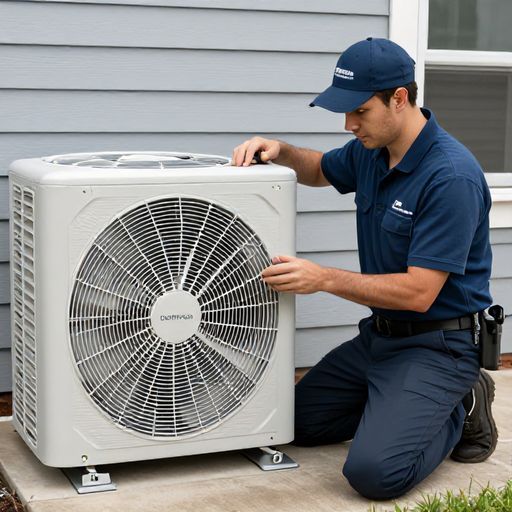
Speed matters during a cold snap. Direct Home Services sits at 57 Ozick Dr Suite i, Durham, CT 06422. That location gives fast access to Durham Center, Lake Beseck, Rockfall, Middletown, Wallingford, Guilford, Madison, Haddam, and North Branford. The trucks carry OEM American Standard parts, including igniters, variable speed blower modules, filter driers, and common AccuLink control boards. Same-day service is available for no-heat calls in 06422 and 06455.
Local knowledge matters. Units near the Durham Fairgrounds need snow clearance plans. Homes uphill from Powder Ridge get stronger winds. Middlefield properties around Lyman Orchards see more frost exposure. The onsite plan accounts for these patterns so the fix holds through February.
When to call a pro
- Short cycling during cold weather or frequent limit trips.
- Unusual odors or noises, including scraping or banging near startup.
- High bills with rooms that never warm up.
- Heat pump blowing cool air or long defrost cycles.
- Visible ice on the outdoor coil or water near the indoor furnace.
Brand support and parts availability
As an American Standard Customer Care Dealer, Direct Home Services keeps deep stock of OEM components for Platinum, Gold, and Silver series systems. Inventory includes Duration compressors, Spine Fin coil cleaners and guards, variable speed blower motors, expansion valves, filter driers, condenser fan motors, and AccuLink control boards. This avoids long waits that lead to space heater use and higher electric bills.
The team services other brands too. Trane, Carrier, Lennox, Goodman, and Mitsubishi Electric systems are common in Middlesex County. Mixed-brand homes are welcome. The techs hold EPA Universal Certification and follow safe recovery and charging practices on all refrigerants.
An example from Durham Center
A 2,100-square-foot colonial near the Middlesex County Historical Society had a Gold 80 Furnace with high gas bills. The homeowner used a five-degree night setback. The furnace ran hot at dawn and tripped the limit once a week. The static measured 0.95 in. W.c. Due to a 1-inch filter and a blocked return. The team installed a 4-inch media cabinet, opened the return, and tuned the blower speed. The setback changed to two degrees. The temperature rise landed inside the plate rating. Bills fell by about 12 percent over the next two cycles, normalized for degree days. Comfort improved in the back bedrooms.
Another case at Lake Beseck
A split-level with an AccuComfort heat pump had persistent frost and long defrost periods. The outdoor Spine Fin coil was dirty and fenced tight on two sides. The expansion valve showed erratic superheat. The fence moved back to 30 inches. The coil was cleaned, and the valve replaced. The AccuLink control board settings were updated, and the balance point lowered based on the homeowner’s electric and propane rates. Runtime dropped. The aux heat seldom came on. The January bill fell by a measurable margin despite colder weather.
Why American Standard fits Middlesex County housing stock
Durham and Middlefield homes range from 19th-century farmhouses to 1990s colonials and newer infill near Rockfall. Many benefit from staged heat and variable speed airflow. American Standard Platinum and Gold series gear handles this well. The controls match real load. The motors are quiet. The coils resist fouling from pollen and farm dust near Coginchaug fields. The equipment thrives when installed and serviced by a team that measures and tunes, not guesses.
Service area and availability
Service covers Durham CT 06422, Middlefield CT 06455, and Rockfall CT 06481. Nearby areas include Middletown, Wallingford, Guilford, Madison, Haddam, and North Branford. The shop location near the Durham Fairgrounds shortens travel time for no-heat calls. Emergency HVAC repair is available. Same-day appointments are common during storms, subject to safety and road conditions.
Licensing, insurance, and credentials
Direct Home Services is licensed and insured in Connecticut. CT Lic #S1-0404042. The company is family owned and operated with 20+ years in the trade. Technicians hold NATE certifications and EPA Universal Certification. Work is performed to code with clear, flat-rate pricing before repair.
Answers to common Durham and Middlefield questions
Does a high-efficiency furnace always save money in an old farmhouse? It depends on envelope leaks. Air sealing often pays first. Then the furnace upgrade delivers the full value. How often should a Spine Fin coil be cleaned? At least annually, and more often near open fields or orchards. What if the furnace is short cycling on cold mornings? Check static, filter pressure drop, and blower setup. Is dual-fuel worth it here? Yes for many homes. Let actual rates and balance point modeling guide the setup. Can a communicating system work with older ducts? Yes, but measure static and correct choke points first.
American Standard HVAC service with local accountability
For the American Standard Platinum 95 Gas Furnace, the AccuComfort Platinum 19 Heat Pump, the Gold 80 Furnace, or a Forefront Air Handler, service is available with OEM parts and documented testing. The goal is clear. Lower winter utility bills in Durham and Middlefield without guesswork. The path is also clear. Test, adjust, verify, and report.
Direct Home Services provides professional HVAC repair, replacement, and emergency plumbing services in Durham, CT. Our local team serves residential and commercial clients across Middlesex, Hartford, New Haven, and Tolland counties with high-efficiency heating, cooling, and drainage solutions. We specialize in rapid furnace repair, air conditioning installation, and expert drain cleaning to ensure your home remains comfortable and functional year-round. As a trusted local contractor, we prioritize technical precision and transparent pricing on every service call. If you are looking for an HVAC contractor or plumber near me in Durham or the surrounding Connecticut communities, Direct Home Services is available 24/7 to assist.
Direct Home Services
57 Ozick Dr Suite i
Durham,
CT
06422,
USA
Phone: (860) 339-6001
Website: https://directhomecanhelp.com/
Social Media: Facebook | Instagram
Map: Google Maps